“Web design” is one of those phrases everyone uses, but few people agree on.
For some, it means colours, fonts, and layouts.
For others, it sounds technical.
And for many business owners, it’s something they know they need, but aren’t quite sure how to judge.
That confusion is often why businesses end up with websites that look fine, cost a fair bit of money, and still don’t really help the business move forward.
So what is web design, actually? And why does it matter more than most people expec
Struggling to Get Leads From Your Website?
This is usually where the question starts.
A business has a website. It’s live. or many small businesses, that starting point is a properly structured company website. It loads quickly enough. It might even get some traffic.
But enquiries are inconsistent. Or worse, non-existent.
The assumption is often that the problem must be:
- Not enough visitors
- Poor SEO
- A lack of advertising
Sometimes that’s true. But very often, traffic isn’t the real issue.
If people are landing on your site and not taking action, the website itself is usually part of the problem. Not because it’s broken, but because it doesn’t line up with how real people make decisions online.
That’s where web design comes in.
It's Not All About the "Pretty Bits"
Design does include how a website looks. That part matters. First impressions are real, and people do judge quickly.
But web design goes beyond visuals.
A site can look modern and still fail if:
- Visitors can’t quickly tell what the business actually does
- Important information is buried or unclear
- Pages feel cluttered or overwhelming
- There’s no clear next step
Good web design isn’t decoration. It’s organisation. It’s clarity. It’s making sure the right things are noticed at the right time.
When people say a website “feels confusing” or “doesn’t seem right”, they’re usually reacting to design decisions, not colours.
What Makes a Site Work for People
Most people don’t read websites properly. They scan. They skim. They jump around.
A working website respects that behaviour.
It:
- Makes the purpose of the page obvious
- Answers common questions early
- Uses headings, spacing, and structure to guide attention
- Doesn’t force visitors to work things out for themselves
The goal isn’t to impress someone with creativity. It’s to help them feel confident they’re in the right place.
When web design works, it often goes unnoticed. Things just feel easier.
Why We Even Bother With This Stuff
It’s fair to ask why any of this should matter.
After all, plenty of businesses get work through referrals, repeat customers, or word of mouth.
But even then, the website still plays a role.
People look you up.
They check that you’re legitimate.
They try to get a sense of what you’re like before making contact.
If the website doesn’t support that moment, doubt creeps in. And doubt is often enough to stop someone taking the next step.
Web design matters because it shapes that quiet decision-making process.
Responsive - Not Just Tech Jargon

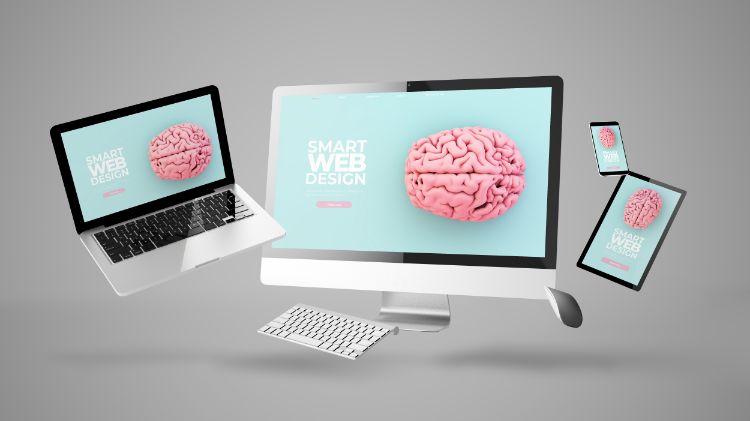
“Responsive design” sounds technical, but the idea is simple.
It means your website works properly on:
- Mobile phones
- Tablets
- Laptops and desktops
This isn’t just about resizing content. It affects:
- Readability
- Navigation
- Button placement
How quickly someone understands what they’re looking at
With most users browsing on mobile, a site that only really works on a big screen is already putting itself at a disadvantage.
Responsive design isn’t an upgrade anymore. It’s the baseline.
Accessibility - More Than a Legal Tick
Accessibility is often treated as a box to tick, usually because of legal guidance or compliance worries.
But at a practical level, accessibility is about usability.
Clear contrast, readable text, sensible structure, and logical navigation don’t just help people with specific needs. They help everyone.
Accessible websites tend to be:
- Clearer
- Easier to navigate
- Less frustrating
From a design point of view, accessibility usually improves the experience rather than limiting it.
Finding a Designer Who Gets Essex

This is where local understanding comes into play.
Businesses in Essex often rely on:
- Local search
- Town-based services
- Trust and familiarity
People don’t always behave the same way they do in larger cities or national markets. Expectations can be more practical, more grounded, and more reassurance-driven.
A designer who understands Essex businesses is usually thinking about:
- How local customers search
- What reassures them
- How quickly they need to understand what you do
That context influences design choices, even if it’s never mentioned explicitly on the page.
So… What Is Web Design, Really?
At its core, web design is about making things easier.
Easier to understand what a business does.
Easier to trust it.
Easier to take the next step.
When design supports those things, everything else works better. SEO, marketing, referrals, and ads all have a stronger foundation to land on.
When it doesn’t, even the best promotion struggles.
That’s why web design matters. Not as decoration, but as structure, clarity, and intent.
Before you head off, if you want a straight-talking next step, WEB-KNACK can map a sensible plan and tidy the rough edges.
For a local angle with real examples and costs, have a read of Affordable Website Design in Essex – it’s a quick way to see what actually works around here.