
Quick Overview
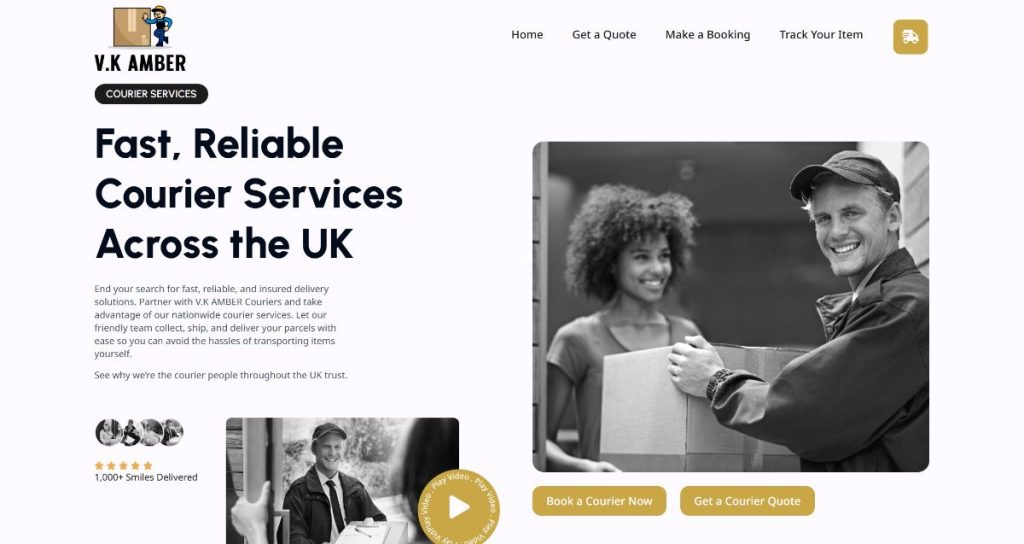
V.K AMBER Couriers is a courier service based in Redruth, Cornwall. In early 2026, the business had no website and no online presence. The project focused on building a structured website alongside a fully custom booking and invoicing system, designed to reduce manual work while improving trust and operational efficiency.
This project was delivered for V.K AMBER Couriers, a courier service operating from Redruth, providing local and long-distance delivery services with a focus on speed, flexibility and reliability.
The Starting Point
When we first spoke, there wasn’t much to audit.
No website.
No booking system.
No real online footprint.
Everything was handled manually – phone calls, messages, back-and-forth coordination.
And that works… up to a point.
But the issue wasn’t just convenience. It was perception.
Without a website, the business didn’t look established.
It made things harder when approaching other businesses.
And it limited growth before it even started.
The Actual Problem
It wasn’t a “design issue”.
It was a credibility and structure problem.
In many cases, especially in service industries like courier work, people expect to:
- Check a website
- Understand how the service works
- Get a clear idea of pricing or process
Without that, there’s hesitation.
In many cases, this is exactly what we see in businesses with no online presence or poor visibility.
The trigger to act was simple
to be taken seriously, the business needed to exist properly online.
What We Built
We didn’t just design a website.
We built a structured system around how the business actually operates.
Website Foundation
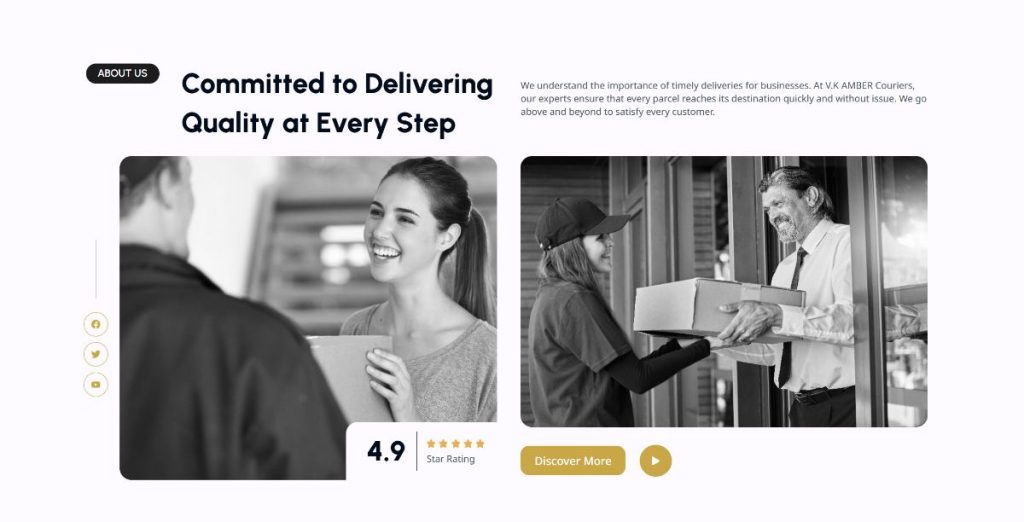
A bespoke website was designed and developed from scratch.
Not template-based.
Not patched together.
The focus was on:
- Clear service explanation
- Simple navigation
- Fast load performance
- Mobile-first usability
Nothing flashy. Just structured properly.
Custom Booking System (Core Build)
This was the most important part.
Instead of using a third-party system with ongoing monthly costs, we built a fully custom booking workflow tailored to how courier jobs actually work.
Here’s how it functions:
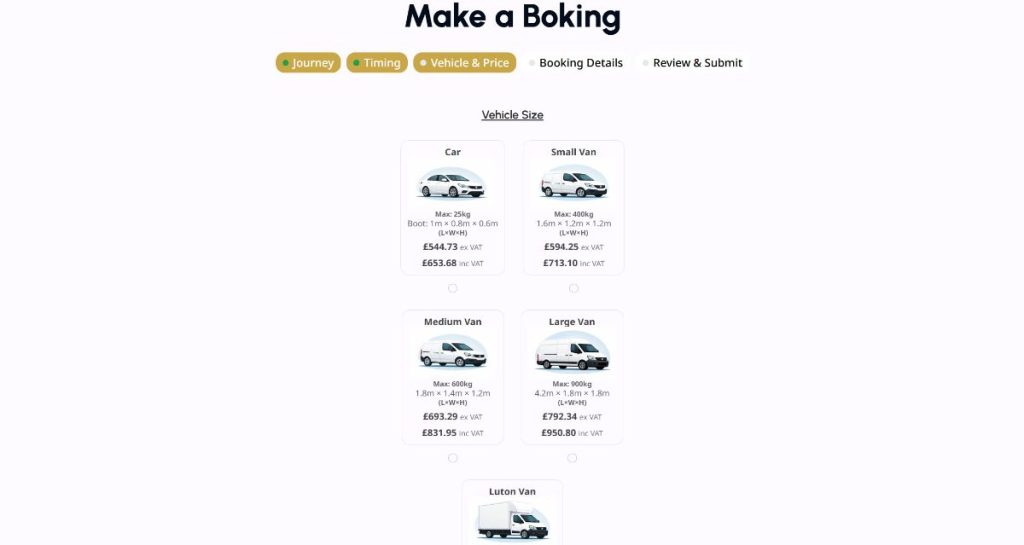
1. Route Input
Users enter collection and delivery postcodes
A live Google Maps route displays distance
2. Delivery Type Selection
Options like:
- Urgent delivery
- Same-day
- Next-day
- Standard
Pricing adjusts based on urgency
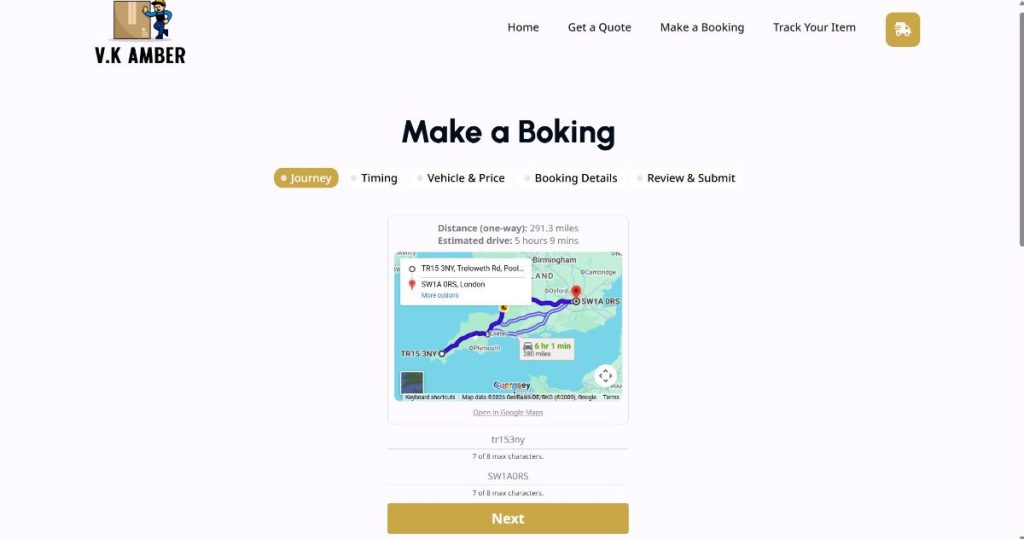
3. Vehicle Selection
Customers choose from 5 vehicle types depending on load size
4. Details Submission
Full delivery information is entered step-by-step
5.Final Review Page
Users double-check everything before submission
Automation Layer
This is where things get interesting.
Once submitted:
- The customer receives a confirmation email
- The business receives full delivery details instantly
If accepted:
- A simple internal form generates a custom invoice automatically
- Invoice is sent directly to the customer
- Upon payment:
Customer receives an SMS confirmation + email confirmation
Business receives a payment confirmation email
No third-party tools.
No £100/month subscriptions.
Minimal maintenance.
Just a system that works.
This avoids many of the limitations typically found in off-the-shelf tools, particularly when it comes to flexibility and SEO foundations.
Key Decisions & Trade-offs
We deliberately avoided:
- Off-the-shelf booking platforms
- Overcomplicated dashboards
- Feature bloat
Why?
Because most systems in this space are:
- Expensive
- Rigid
- Not built for how smaller courier businesses actually operate
Instead, we kept it:
- Lean
- Controlled
- Purpose-built
That decision reduced long-term costs and kept the system easy to manage.
Results (What Actually Changed)
The biggest shift wasn’t just “having a website”.
It was how the business is now perceived and operates.
- The business now has a clear, professional online presence
- It’s easier to approach and secure new contracts
- Booking and quoting is now structured and consistent
- Admin time has been significantly reduced
- The business appears more established and trustworthy
In practical terms, it moved from:
“informal and manual” – “structured and scalable”
Which, in many cases, is what enables growth in the first place – especially when moving away from the issues highlighted in why websites fail to convert.
Client Type
A Real Moment
One thing that stood out
the feedback wasn’t overly technical.
It was simple.
The owner left a review saying:
“We’re really happy with the service and the final results. Communication was easy throughout, everything was handled professionally and quickly, and the pricing was clear with no hidden fees. The website looks great and works perfectly. Would definitely recommend to anyone needing a reliable web design agency. ⭐️⭐️⭐️⭐️⭐️”
Which, roughly translated, is just genuine appreciation for the work and support.
And honestly, that says more than a polished testimonial ever could.
What This Case Shows
This wasn’t about redesigning something broken.
It was about building the foundation properly from day one.
Because without structure:
- Growth becomes harder
- Operations stay manual
- Perception stays limited
And those problems compound over time.
Final Thought
In many small service businesses, the website isn’t just a marketing tool. It becomes part of the operational system. Handled properly, it reduces friction, saves time and supports growth.
This is where structured builds differ from typical web design Essex approaches that prioritise speed over long-term performance.
It becomes part of the operational system.
Handled properly, it reduces friction, saves time and supports growth.
Handled poorly – it just sits there.